How can a simple scarf can be so powerful, so desired and so expensive?
For a person that loves to learn about a brand’s history, I have made a point of doing a little research after visiting several exhibitions to make this historical trip around Burberry world.
Good to know
The brand
Historical facts
Of course, every
brand sets out to
create designs
that will work on a
commercial scale and envision
the success of each season’s
product lines.
However, the
thing that struck me about
Burberry was the vast influence
of the label’s heritage,
tradition and distinct style that
is embellished into its prints
and garments.There is a story
concealed with every fabric
thread, every alignment and
product proportioning, which
is unknown to many that wear
the label’s garments.
Founded in 1856, Thomas
Burberry aged 21, opened his
first store in Basingstoke and
was focused on developing
outdoor attire to combat the
British weather in premium
style.
However, the original trench
coat was designed to protect
the military and became the
apparel provider for British
soldiers during both World
Wars. Focus on endurance
and functionality, each detail
serves a purpose to keep the
officers protected against
wind and rain. It was essential
that the piece would be
versatile to suit athleisure
pursuits, like walking and
horse riding.
In 1879, Burberry introduced
in his brand the gabardine, a
fabric that had been associated
with polar expeditions and
air travels due to its hardwearing,
water-resistant yet
breathable properties. Burberry
recognised the benefit of
using a yarn which is waterproofed
before weaving to
create durable outerwear that
would stand the test of time.
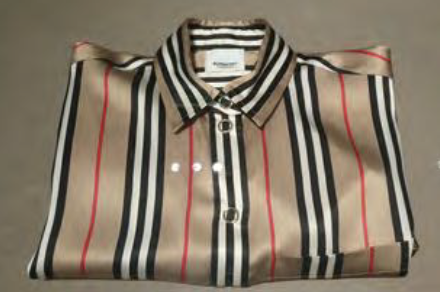
The unmistakable tartan check
that combines camel, ivory,
red and black has been registered
as a trademark following
the rule of 45’ degrees the
same pattern that makes a
Burberry scarf one of the most
coveted.
But
These historical statements
were impressive, however I personally
for me, the most impressive
aspect was the actual
exhibition itself.
The creative designer and
the CEO (Christopher Bailey)
did an amazing job, which
brought the customers much
closer to the brand, giving an
insight in to the creative
process. and engaged with
them.
“Focus on endurance and functionality, each detail serves a purpose to keep the officers protected against wind and rain.”
“House of Makers”
Very last minute and very
spontaneously, Amber took
me to an exhibition named
the “House of Makers” and
suddenly everything started
to make sense. Before I even
learnt anything about the
historical background, that
experience made me change
my mind about the brand.
A variety of artists from diverse
backgrounds presented their
art pieces of art and explained
the inspiration and mindset
behind creating their latest
collection. From sculptors to
calligraphers, fine leather
craftmanship to contemporary
new material structures, it is
fascinating to understand how
the inspiration for clothing
making comes about and how
creative approaches lead to
innovative pieces.
“The Cape Remained”
I was deeply intrigued by all
the creative processes from
the House of Makers exhibition,
but even more amazed by
“The Cape Remained” exhibition,
which was showcased in Milan,
Seoul, Los Angeles, Paris, and
Dubai.
Now, to you and me
the garments presented in this place may not be our style and
are most probably out of our
price range, but I find it hard to
believe that you would not be
enthralled by what you were
witnessing.
A raw place,
imperfect, almost destroyed,
but presenting one of the most
luxurious collections I’ve ever
seen. Capes tailored in luxury
fabrics, boasting an undeniably
sophisticated aesthetic that
engenders a variety of innate
feelings from lust to envy.
Objects that have managed
to transport us to another
dimension of time-space and
imagination. In a dimension of
greater beings, among angels
and demons marked by feathers,
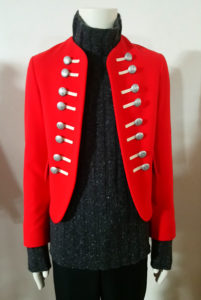
ceramic pearls, whipped laces,
military brides and origami
folding birch, details of
unique superiority.
At the same time, it was
showcased the new collection
inspired by the work and
atelier of a remarkable
character that disappeared
13 days before my birth,
named Henry More.
Feminine, asymmetric and
wavy forms inspired by
silhouettes that were both
classic and modern.
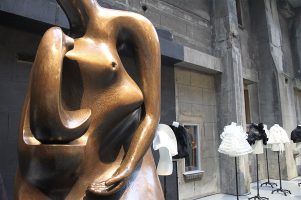
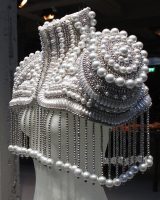
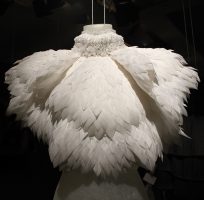
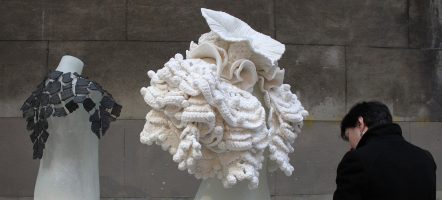
“Objects that have managed to transport us to another dimension of time-space and imagination.”
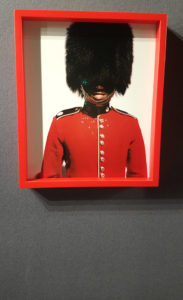
“Here We Are,”
Last but not least, the third
exhibition had a deep impact
on me and brought me closer
to the brand was a photography
exhibition titled “Here We
Are,” with portraits of British life.
Genuine photos that make us
part of this tale, the history
of the rigor of uniforms, rainy
days and situations that just
who live here can understand.
A reflexion of how the British
identity can be found within
Burberry collections.
Future
In 2018 Riccardo Tisci took
control of this big ship
starting with big changes;
from the logo monogram, to
ban of real fur, to stopping
the practice of burning unsold
goods.
New era, new expectations,
but of course, this engaging
tour which spans across its
humble beginnings to their
latest fashion decisions, I finally
realise the why the Burberry
has become a beloved and
desirable brand.
The unparalleled mix of inspirations,
creativity, the focus on
tradition and meticulous care
and craftmanship that goes
into each piece, transcended
a simple scarf into the
world-famous, iconic,
Burberry scarf.
Did you know?
Burberry’s heritage pattern – the Vintage check – is displayed in some form on every coat.
The most complex part of the trench coat is the collar; it takes a year to learn how to do perfectly, with more than 180 stitches on it.
In 1934, Burberry offered same day delivery in London with a special vehicle.
Burberry has been granted a British Royal Qarrant by HM Queen Elizabeth II, certifying them as Weatherproofers & Outfitters that supply apparel to the royal family.
Between 2001 to 2005, the brand was associated with football-hooligans and the check pattern was banned from some sports events.